


MS Project management
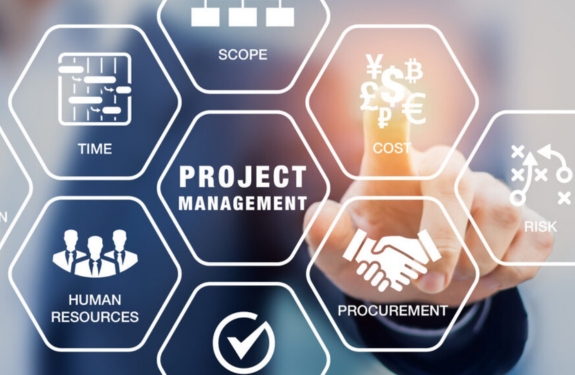
Information on the specialty MS “Project Management”
General Information about the Program
Program title: Master of Science in Project Management
Qualification: Master of Science (MSc)
Duration of study: 1 year (12 months, full-time only)
Program volume: 40 credits (ECTS/UZ credits)
Additional requirements: higher aducation; no work experience required.
Regulatory framework:
National requirements for the Master’s level (DTS)
International project management standards PMBOK®
ISO 9001, ISO 31000 standards
PMI GAC (Global Accreditation Center) recommendations
Program Objectives
- To train highly qualified specialists capable of effectively managing projects in conditions of uncertainty, digitalization, and strategic change.
- To provide graduates with comprehensive knowledge and skills in accordance with international standards.
- To develop competencies for working in interdisciplinary teams and managing projects on a global scale.
- To prepare students for international certifications.
Program Tasks
The program is aimed at enabling students to master:
- Modern project management methodologies (predictive, adaptive, hybrid);
- tools for project planning, budgeting, monitoring and performance evaluation;
- methods of risk, quality, change, and procurement management;
- leadership and communication competencies;
- digital tools for project activities;
- research and analytical skills.
Training Profile
Areas of application of the obtained qualification:
- business and entrepreneurship
- public administration
- construction and infrastructure
- IT and digital projects
- international organizations
- industry, energy, transport
- education and social projects
Program Structure (40 credits)
Mandatory Modules (8 × 4 credits = 32 credits)
- Fundamentals of Project Management
- Planning, Scheduling, and Control
- Project Financing and Cost Management
- Project Risk Management
- Project Quality Management
- Change Management
- Leadership and Stakeholder Management
- Modern Methods and Digital Implementation
Elective Modules (choice of 2 × 4 credits = 8 credits)
- Project Financing and Investment Analysis
- Project Sustainability (ESG, Social Impact)
- Advanced Procurement and Contract Management
- Research Methods + Preparation for PMP/CAPM
Requirements for the Final Qualification Work
- Solution of a real practical problem or a thesis
- Defense before the State Attestation Commission
- Presence of an analytical part, methodology, results and conclusions
Academic Mobility and Integration
The program may include:
- Joint modules with foreign universities
- Invited professors
- Preparation for international certification exams
- Student participation in projects of industrial partners
-
Additional Information
Specialty Code Specialty Name Qualification Study Duration Form of Study Admission Period Contract Amount (UZS) 70410802 MS Project Management (MBA) Economist, educator-researcher 1 year
Full-time
Admission Committee: July–August, December–January
Start of Study: September, March
The tuition fee per year of the academic program 43.5 million UZS Requirements for Candidates:
- Higher aducation;
- No work experience is required;
Admission Examination Procedure:
- Interview (based on specialization and general work experience);
Tests of the Agency for the Assessment of Knowledge and Qualifications (in the specialty and English language).
English Language Privileges:
- B2 level according to CEFR;
- IELTS score of 5.0;
- TOEFL score of at least 72.
Required Documents:
Candidates wishing to enroll in the master's program must submit an application addressed to the Director of the Graduate School of Business through the official website, attaching copies of the following documents:
- Recommendation letter signed by heads of government bodies, economic associations, NGOs, and business entities;
- Copy of diploma of higher education;
- Color photo sized 4x6 cm;
- Passport (original must be presented during the exam, if available);
- Certificate confirming English proficiency in the prescribed format (if available).
How to Apply:
Applications are submitted electronically via the official website of the Graduate School of Business.
-
Subject catalog
PROGRAM OF 10 MODULES
(MS) Master of Science in Project Management – 1 year – 8 core modules + 2 elective modules
Each module = 4 credits
Module 1 - Fundamentals of project management
Prerequisites: None (core module).
Module Description
This module provides a comprehensive study of the principles, structures, and processes of modern project management. It develops conceptual and practical understanding of project life cycle models (predictive, adaptive, and hybrid), PMBOK® knowledge areas and process groups, governance structures, and key terminology required for advanced study. Students will acquire foundational competencies aligned with PMI® domains and be prepared for higher-level modules in planning, risk, finance, and leadership.
Reading List
- PMI. A Guide to the Project Management Body of Knowledge (PMBOK® Guide) – Latest Edition
- Kerzner, H. Project Management: A Systems Approach
- Meredith & Mantel. Project Management: A Managerial Approach
Module 2 - Project planning, scheduling and control
Prerequisites: Fundamentals of Project Management.
Module Description
This module develops advanced technical skills in project planning, scheduling, and performance control. Students learn to create work breakdown structures, develop network diagrams, calculate critical paths, apply PERT, perform resource leveling, and use project management tools such as Gantt charts, earned value management, and variance analysis. Practical training using MS Project and/or Primavera strengthens professional competencies.
Reading List
- PMI. PMBOK® Guide – Schedule Management Chapter
- Kelley & Walker. Certified Construction Manager Study Guide
- Project Management Institute. Practice Standard for Scheduling
Module 3 - Project financing
Prerequisites: Fundamentals of Project Management.
Module Description
This module develops financial literacy within the project environment, covering budgeting, cash flow forecasting, cost estimation, earned value management, procurement and commercial contracts, fundamentals of contract law, supplier evaluation, and financial risk analysis. Special emphasis is placed on decision-making under financial constraints.
Reading List
- PMI. PMBOK® Guide – Cost and Procurement Chapters
- Yescombe, E. Principles of Project Finance
- Flyvbjerg, B. How Big Things Get Done (Cost Overruns and Forecasting)
Module 4 - Project risk management
Prerequisites: Fundamentals of Project Management.
Module Description
This module develops advanced competencies in project risk management in accordance with the PMI PMBOK® Guide and international risk management standards (ISO 31000). It prepares students to identify, analyze, and control uncertainties affecting project objectives using qualitative and quantitative methods, including Monte Carlo simulation, decision trees, sensitivity analysis, and risk exposure modeling. Students will create risk registers, develop risk mitigation and contingency strategies, and integrate project risk management processes into Enterprise Risk Management (ERM) frameworks.
Reading List
- PMI. PMBOK® Guide – Risk Management Chapter
- ISO 31000: Risk Management — Guidelinesv Hillson, D. Practical Project Risk Management
- Hubbard, D. The Failure of Risk Management
- Cooper et al. Project Risk Management Guidelines
Module 5 - Project quality management
Module Description
This module covers advanced principles of project quality management in accordance with ISO 9001, Lean, and Six Sigma concepts. Students develop skills in quality planning, assurance, and control, continuous improvement, and root cause analysis using industry-standard tools and techniques.
Reading List
- ISO 9001: Quality Management Systems
- Juran & Godfrey. Juran’s Quality Handbook
- Montgomery. Introduction to Statistical Quality Control
- Evans & Lindsay. Managing for Quality and Performance Excellence
Module 6 - Change management
Module Description
This module develops expertise in managing change in both project and organizational contexts using leading models (Kotter, ADKAR). It integrates benefit management, readiness assessment, stakeholder engagement, and organizational behavior concepts.
Reading List
- Kotter, J. Leading Change
- Hiatt, J. ADKAR
- Cameron & Green. Making Sense of Change Management
- Hornstein. Managing Change in the Project Environment
Module 7 - Leadership, people management and stakeholder engagement
Prerequisites: Fundamentals of Project Management.
Module Description
This module develops the behavioral and interpersonal competencies required for effective project leadership. It integrates theories of leadership, motivation, teamwork, power dynamics, emotional intelligence, negotiation, conflict management, and organizational behavior. Students apply stakeholder analysis techniques to design communication and engagement strategies aligned with project objectives.
Reading List
- Northouse. Leadership: Theory and Practice
- PMI. PMBOK® Guide – Stakeholder and Communications Chapters
- Fisher & Ury. Getting to Yes
- Katzenbach & Smith. The Wisdom of Teams
Module 8 - Contemporary methods and digital project delivery
Module Description
Students gain theoretical and practical skills in agile methodologies (Scrum, Kanban, Lean), hybrid development approaches, digital project tools, and the fundamentals of DevOps and digital transformation. Emphasis is placed on iterative development, customer value, collaboration, and modern digital ecosystem tools such as Jira, Trello, Asana, and MS Azure DevOps.
Reading List
- Schwaber & Sutherland. The Scrum Guide
- PMI. Agile Practice Guide
- Denning. The Age of Agile
- Poppendieck. Lean Software Development
A. Core Modules (8) — Mandatory
Fundamentals of Project Management
Project Planning, Scheduling, and Control
Project Financing
Risk Management
Quality Management
Change Management
Leadership, People Management, and Stakeholder Engagement
Contemporary Methods and Digital Project Delivery
B. Elective Modules (Choose 2)
Electives allow students to tailor the program to their sector and professional interests.
Project Finance and Investment Appraisal
Sustainability, Environmental Assessment and Social Impact
Contracts and Procurement
Research Methods and Professional Practice(including preparation for professional certification)(Choose any two to complete a total of 10 taught modules, including the core modules.)
C. Capstone / Final Project
Applied Capstone Project (group or individual) – students complete a full project life cycle (preferably industry-sponsored), including a project plan, risk register, schedule, budget, procurement plan and analytical report. Assessment includes project outcomes, a presentation and an oral examination.
Alternative option: Dissertation (for students pursuing a research-focused pathway).
D. Credits, Assessment, and Delivery
Credit model: 10 modules × 4 credits = 40 credits (UK master’s degree model), including the capstone course.
Assessment method: coursework – 40%, project outputs – 30%, examinations/presentations – 20%, participation in laboratory sessions/certification activities – 10%.
Mode of delivery: blended learning – intensive teaching blocks + evening/synchronous online laboratory sessions + electives.
E. Learning Outcomes
Graduates will be able to:
Apply PMBOK®-aligned knowledge to plan, execute and control projects across various sectors.
Use quantitative methods (planning, budgeting, EVM, quantitative risk analysis) and project analytics to support decision-making.
Lead multidisciplinary teams, manage stakeholders and negotiate project outcomes.
Align projects with organizational strategy and manage portfolios and programs.
Apply agile/hybrid methods and digital tools for modern project delivery.