


News
An international scientific and practical conference titled “Pathways to Sustainable Growth in Building and Managing an Innovation-Driven Economy: Entrepreneurship, Innovation and the Prospects of Small and Medium-Sized Businesses” was held
18-05-2026 | 791
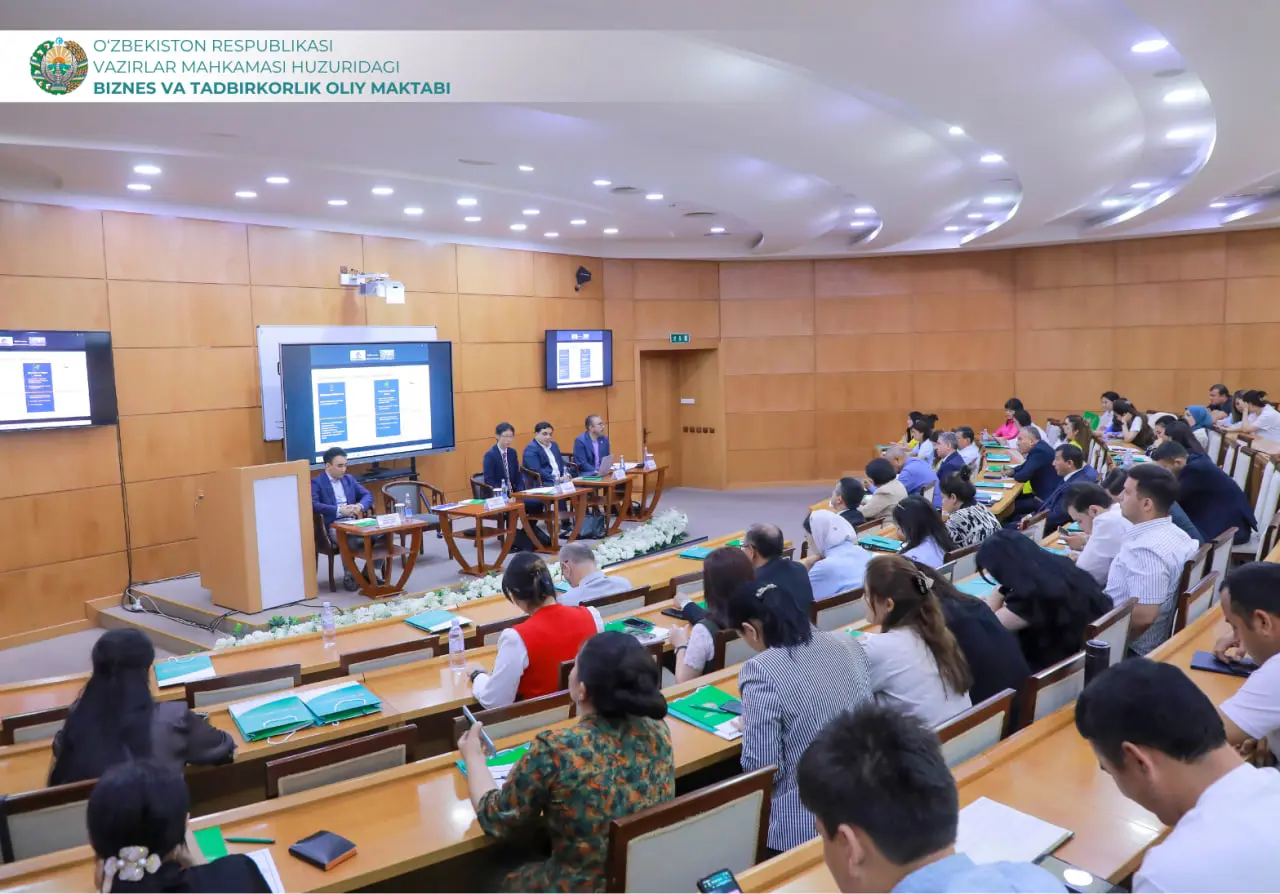
On 18 May 2026, the Graduate School of Business and Entrepreneurship hosted an international scientific and practical conference on the topic “Pathways to Sustainable Growth in Building and Managing an Innovation-Driven Economy: Entrepreneurship, Innovation, and the Prospects of Small and Medium-Sized Businesses”. The event brought together leading international scholars, representatives of ministries and government agencies, industry associations, commercial banks, as well as listeners and faculty of the Graduate School of Business.
The conference began with the signing of Memoranda of Understanding between the Graduate School of Business and Entrepreneurship and Entrepreneurship Development Company JSC, covering the development of entrepreneurship and support for small and medium-sized enterprises (SMEs) and between the Graduate School of Business and the Research Institute for the Development of Digital Technologies and Artificial Intelligence (AIRI), focused on integrating AI technologies into entrepreneurship and small business.

The policy document adopted on 11 September 2023 under the “Uzbekistan – 2030” Strategy sets out key medium-term economic development targets. Under the Strategy, GDP is to reach $240 billion, the share of the private sector in the economy is to grow to 85%, the contribution of small business and private entrepreneurship to GDP is to rise to 60%, and industrial value added is to increase to 60%.
Meeting these targets requires for new approaches to developing an innovation-driven economy, the broad adoption of modern technologies, digital solutions and artificial intelligence across industries, the creation of a startup ecosystem capable of nurturing innovative projects and a fundamental overhaul of the system for training highly qualified professionals — particularly technical specialists who can make a meaningful contribution to the country’s economic development.

The conference aimed to explore promising directions and priorities for building an innovation-driven economy in the context of global economic change, to examine effective mechanisms for supporting SMEs through the adoption of modern technologies and to discuss existing challenges in developing innovative entrepreneurship — including policy instruments for creating an effective startup ecosystem that enables innovative startups to thrive.
The conference also addressed the role of modern technologies in ensuring sustainable growth and promoting green economic development, as well as various financial support instruments for entrepreneurship in building a competitive economy.

Over 100 participants attended, including representatives of government bodies, ministries, agencies, industry associations, commercial banks, academic circles from leading research institutions and universities across the country, as well as faculty and listeners of the Graduate School of Business.
The plenary session featured keynote addresses by Abbos Makhamatov, Chairman of the Board of Entrepreneurship Development Company JSC; Professor Dr. Said Irandust, Founding rector of the American University of Technology in Tashkent; Yuta Ichinose General Director of the Japan External Trade Organization (JETRO) in Tashkent; Islomjon Baikhanov Deputy Director of the Research Institute for Digital Technologies and Artificial Intelligence; Dalerkhon Nodirov CEO of IT Park Ventures LLC; and Dr.Tatyana Maslevich, Head of the Management Department at the Russian Presidential Academy of National Economy and Public Administration (RANEPA).

In his address, Abbos Makhamatov outlined the key provisions of the economic reforms aimed at further supporting SMEs in Uzbekistan, and introduced participants to the mechanisms and instruments available through Entrepreneurship Development Company JSC to stimulate small and medium-sized businesses across the country.
In his presentation, Professor Said Irandust Founding rector of the American University of Technology, highlighted the growing potential and academic capacity of universities in the new realities of an innovation-driven economy — institutions tasked with training the highly qualified technical specialists that the economy increasingly demands.

The General Director of the JETRO Tashkent office spoke about Japan's economic policy for expanding and strengthening the institutional framework of entrepreneurship support infrastructure at the regional level.
Deputy Director of the Research Institute for Digital Technologies and Artificial Intelligence Islomjon Baikhanov delivered a detailed presentation on the potential of AI technologies across various economic sectors, current trends in the development of AI in the economic sphere, and the opportunities that modern digital solutions offer for enhancing the competitiveness of businesses and industries.

RANEPA representative Tatyana Maslevich introduced participants to the digital habits of the new generation as a basis for developing innovative SME strategies in the food industry.
The IT Park Ventures CEO Dalerkhon Nodirov presented an overview of the current state and prospects of the country’s startup ecosystem, the growing innovative potential of startups in strengthening national economic competitiveness, and the attraction of venture capital from leading international investment institutions and companies to finance promising startup projects across various sectors.

The plenary session closed with a substantive exchange of views on the topics presented, followed by a Q&A session in which leading experts addressed questions from conference participants.
The conference continued with sessions devoted to innovative entrepreneurship and SME development, sustainable economic development and the adoption of green technologies and modern technology-based financial instruments for small business support.

Following the conference, it is planned to publish scholarly papers by speakers, researchers and graduate students from research institutions and leading universities across the country. These papers will subsequently be submitted to the relevant ministries and agencies for practical consideration, with a view to implementing the conference’s conclusions and recommendations in support of strengthening the country’s innovation economy.